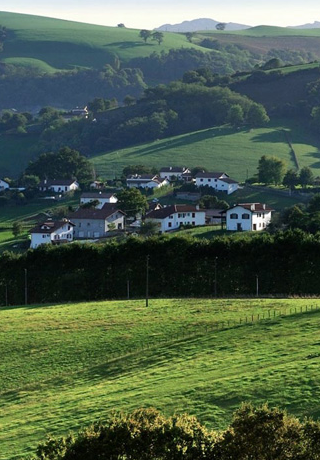
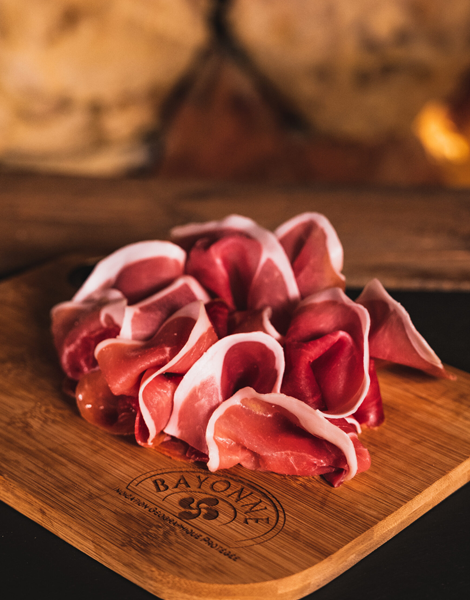
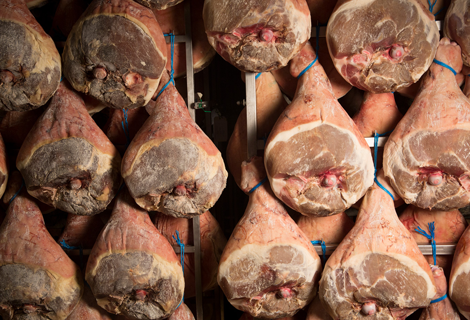
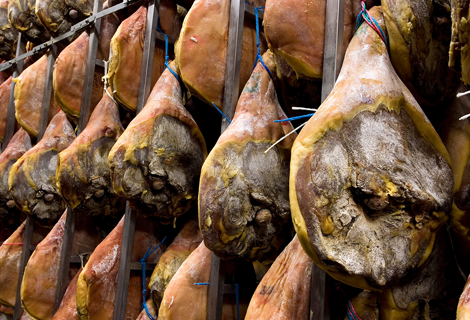
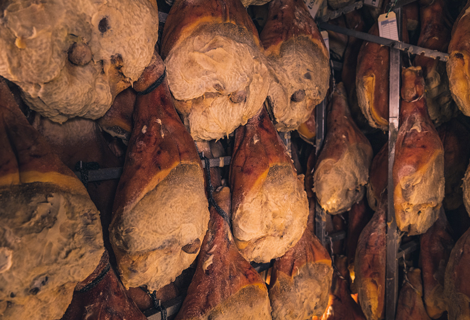
C’est au cœur du Bassin de l’Adour, dans le Sud-Ouest de la France, qu’est élaboré le jambon de Bayonne. Cet ancrage territorial, qui donne au jambon de Bayonne son goût et son caractère, est garanti depuis 1998 par l’Indication Géographique Protégée (IGP). Fondant en bouche, de saveur délicate et à la salinité peu prononcée, le jambon de Bayonne est aujourd’hui le jambon sec français de renommée internationale le plus apprécié !
patrimoine
culinaire
Notre terroir, toute une histoire
Comme il y a mille ans, le jambon de Bayonne est élaboré au cœur d’une aire géographique strictement délimitée : le Bassin de l’Adour. C’est là qu’entre océan Atlantique et montagnes Pyrénéennes sont réunies des conditions uniques pour produire le jambon de Bayonne.
Produit dès le Moyen-Age, cité dans Gargantua, apprécié sur les tables royales, le Jambon de Bayonne vous invite à découvrir son histoire légendaire !
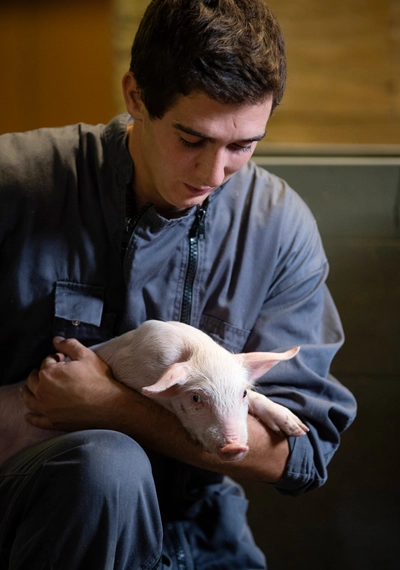
Le jambon de Bayonne est exclusivement issu de porcs nés et élevés dans le grand Sud-Ouest de la France.
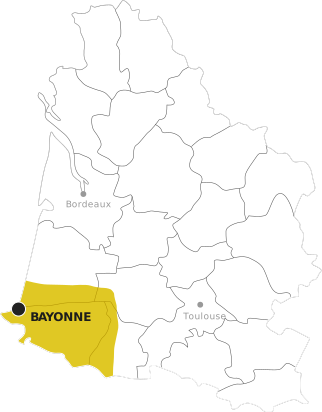
Zone de salaison du jambon de Bayonne
Toutes les étapes de production du jambon de Bayonne sont réalisées dans le Bassin de l’Adour. Cette zone bénéficie d’un climat idéal pour l’affinage des jambons sous « l’effet de foehn ». Il s’agit de l’alternance d’un climat doux et humide et de jours plus secs.
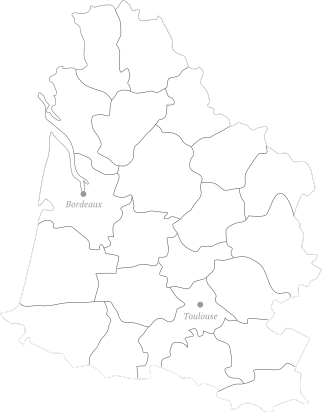
La zone de salaison et d’affinage comprend le département des Pyrénées-Atlantiques ainsi que les cantons limitrophes du Gers, des Hautes-Pyrénées et des Landes. Elle est délimitée à l’ouest par l’océan Atlantique, au sud par la chaîne montagneuse des Pyrénées, au nord et à l’est par le fleuve Adour.
Garantie d'origine IGP
Zone de naissance et d'élevage des porcs
Le jambon de Bayonne est exclusivement issu de porcs nés et élevés dans le grand Sud-Ouest de la France.
Zone de salaison du jambon de Bayonne
Toutes les étapes de production du jambon de Bayonne sont réalisées dans le Bassin de l’Adour. Cette zone bénéficie d’un climat idéal pour l’affinage des jambons sous « l’effet de foehn ». Il s’agit de l’alternance d’un climat doux et humide et de jours plus secs.
La zone de salaison et d’affinage comprend le département des Pyrénées-Atlantiques ainsi que les cantons limitrophes du Gers, des Hautes-Pyrénées et des Landes. Elle est délimitée à l’ouest par l’océan Atlantique, au sud par la chaîne montagneuse des Pyrénées, au nord et à l’est par le fleuve Adour.
Indication Géographique Protégée (IGP)
L’IGP garantit l’authenticité et la qualité du Jambon de Bayonne. Elle permet de préserver la tradition pour vous offrir une expérience gustative incomparable. La certification IGP met en avant l’engagement de toute la filière Jambon de Bayonne. Le respect des normes, de la tradition et du terroir, permet d’offrir un produit unique à la qualité constante.
Premier maillon de la filière Jambon de Bayonne, les éleveurs s’engagent à fournir des porcs de qualité nés et élevés dans le grand Sud-Ouest et nourris aux céréales locales produites à 50% sur leurs exploitations.
Les 27 salaisonniers de la filière Jambon de Bayonne sont des artisans qui, en respectant les saisons et des gestes ancestraux, élaborent au terme de longs mois d’affinage, un jambon d’exception et d’une renommée à nulle autre pareille.
Il paraît que l'on peut fabriquer du jambon de bayonne jusqu'en Charente ?
Non, en aucun cas. La transformation et l’affinage du jambon de Bayonne ne peut se faire qu’exclusivement dans le Bassin de l’Adour. Il comprend le seul département des Pyrénées Atlantiques ainsi que les cantons limitrophes. Ceci est bien inscrit et précisé dans le cahier des charges homologué par l’Institut National de l’Origine et de la Qualité (INAO) et par la Commission européenne, qui enregistre le cahier des charges et la dénomination du produit en IGP (Indication Géographique Protégée). Tout autre provenance de fabrication serait une usurpation. Seuls sont autorisés des élevages de porcs en Charente (voir la délimitation géographique). Les cuisses sont découpées et envoyées vers les différents sites de salaison et d’affinage dans le Bassin de l’Adour.
Comment reconnaître un bon jambon de Bayonne ?
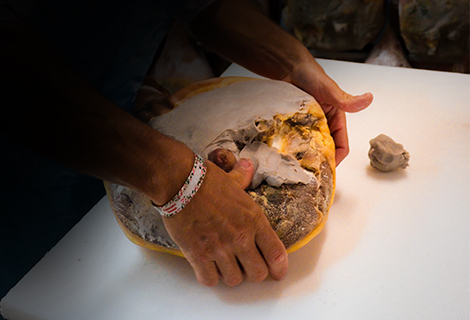
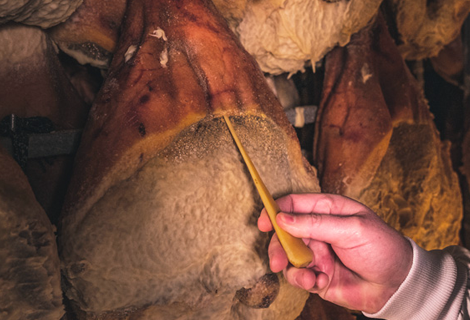
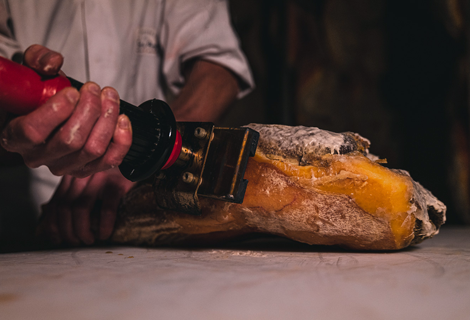
Que les jambons soient entiers ou désossés, la date de mise au sel est toujours indiquée en numéro de semaine sur l’étiquette accompagnatrice. Elle vous donne ainsi la durée de fabrication du jambon. Le cahier des charges prévoit un minimum de 7 mois d’affinage. L’âge moyen des jambons est de 9 à 12 mois. D’une manière générale, plus la durée de fabrication du jambon est longue, plus il pourra développer ses qualités sensorielles. La « Lauburu », (croix Basque) brûlée sur la couenne et toujours imprimée sur l’étiquetage, est le signe de garantie et de distinction qui fait du jambon de Bayonne un jambon d’exception. Concernant le prédécoupé et préemballé, vous disposez d’un choix de différentes marques commerciales, à vous de déterminer celle qui vous convient le mieux. Cette appréciation est très subjective, chaque salaisonnier laissant son empreinte spécifique.
Pourquoi le jambon de Bayonne n'est-il pas une AOP ?
L’AOP (Appellation d’Origine Protégée) nécessite que toutes les opérations d’approvisionnement et de transformation soient réalisées sur une seule et même zone géographique délimitée. Dans le cas du jambon de Bayonne, il existe une zone délimitée d’approvisionnement des porcs et une autre zone délimitée de transformation. C’est pourquoi il est protégé dans le cadre d’une IGP.
À quoi sert l'IGP ?
L’IGP(Indication Géographique Protégée)a été mise en place pour protéger les savoir-faire et la renommée de nos produits. L’IGP protège le cahier des charges du produit et sa dénomination géographique contre les usurpations ou les contrefaçons. Elle indique au consommateur que l’origine et la qualité du produit est attestée et contrôlée. Ainsi, dans le cas du jambon de Bayonne, l’organisme certificateur indépendant et agréé exerce des contrôles pour éviter, entre autres, ces usurpations ou ces contrefaçons. Il intervient également pour contrôler le respect du cahier des charges par les transformateurs ou les éleveurs.
Tous les jambons secs subissent le même traitement. Cela commence par le salage qui va permettre la conservation du jambon. Le jambon de Bayonne n’échappe pas à la règle : c’est un produit de salaison. De gros efforts ont été réalisés par les salaisonniers afin de réduire le taux de sel et le rendre conforme aux dispositions du plan national nutrition et santé.
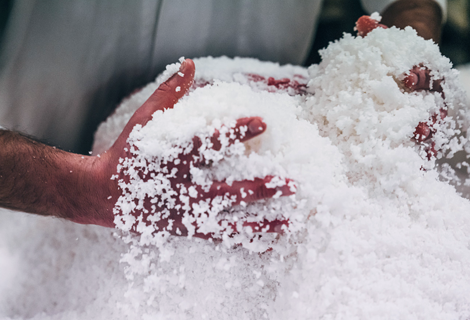
De plus, seul le sel de source de Salies-de-Béarn est autorisé pour la salaison des jambons de Bayonne. Contrairement au sel de mer, ce sel de source, en plus d’être très pur et de couleur naturellement blanche, confère au jambon de Bayonne une salinité plus douce.